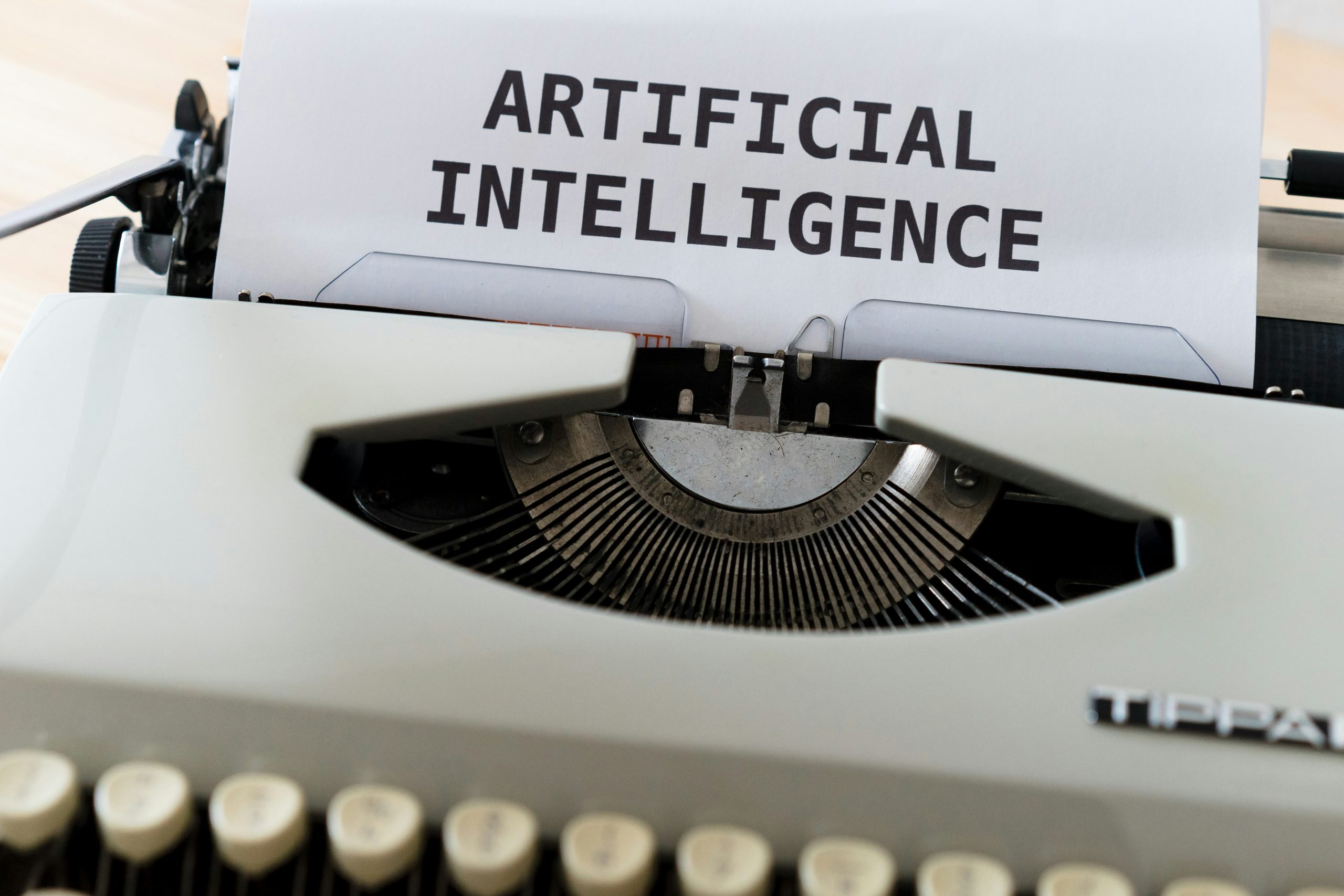
There are moments when a blank page seems more like a wall than an invitation. You have a lot of ideas, but it can be difficult to express them in a way that flows, makes sense, and doesn’t sound like a textbook. AI writing assistants can help with that.
Consider them as a very useful co-pilot for your creative journey rather than as a substitute for your brain. In the end, they can help you realize your creative potential by assisting you with brainstorming, overcoming writer’s block, honing your ideas, and even exploring new stylistic avenues. When one hears the term “writer’s block,” they frequently picture a creative genius looking pitifully at a cursor that is blinking. Although there are undoubtedly difficult times, portraying it as a mystical block can be deceptive. Frequently, what appears to be a block is actually a combination of exhaustion, unclear direction, or just becoming stuck on a single sentence or phrase. By removing these perceived obstacles, AI writing assistants can be helpful.
For those interested in enhancing their writing skills with the help of technology, a related article on the benefits of AI writing assistants can be found at this link. This resource explores how AI tools can streamline the writing process, improve productivity, and assist in generating creative ideas, making them invaluable for both professional and personal writing endeavors.
Changing to “Bounce” from “Block”. Consider AI as a tool to “bounce” ideas around rather than as an impassable barrier. An AI can provide a number of variations if you’re stuck on an opening; they may not be flawless, but they will be sufficient to inspire your own ideas & deviations. This is about giving you several starting points, not about having it do the work for you.
Prompt engineering’s power. An AI assistant’s efficacy depends on how you “prompt” it. Consider it similar to giving directions to an extremely competent but literal intern. The output will be more pertinent and useful if your prompt is more precise and unambiguous.
Sure, here is the sentence with the clickable link:
Join our Ai Membership community on Facebook for exclusive content and discussions.
Creating Useful Prompts. It takes more than just tossing a topic at the AI to accomplish this. Think about this. Context: Who is the audience for this writing?
In the ever-evolving landscape of technology, AI writing assistants have become invaluable tools for enhancing productivity and creativity. These innovative applications not only help streamline the writing process but also offer suggestions that can improve the overall quality of content. For those interested in understanding the implications of using such tools, a related article discusses the potential challenges and benefits of AI in writing. You can read more about it by following this link. As we continue to integrate AI into our daily tasks, it is essential to stay informed about its impact on our work and communication.
What is its goal? Tone: Do you prefer a formal, casual, lighthearted, or instructive tone? Format: Do you want a paragraph, an outline, a complete draft, or even just bullet points?
Keywords/Concepts: What are the main points you want to make? Iterative prompting is a conversation rather than a monologue. Don’t expect to be flawless the first time. Writing for AI is frequently an iterative process. You give a prompt, receive an answer, and then modify your prompt in light of the results. You can direct the AI toward your intended result through this back-and-forth.
Freedom of thought is often essential for creative expression. Writing down your initial ideas can be the most challenging aspect of a project. AI writing assistants are capable of serving as unceasing brainstorming partners, providing a variety of ideas without passing judgment. Creating Idea Seeds.
When given a broad topic, such as “sustainable urban gardening,” an AI can produce a multitude of subtopics, angles, and possible article titles. This can include items like these that you may not have thought of. The function of vertical farming in crowded urban areas.
participation of the community in urban green areas. the financial advantages of regional food production. technological advancements in urban farming. investigating various viewpoints.
There are moments when you are confined to one perspective. It is possible to ask an AI to investigate a subject from various angles. When writing about a new technology, for instance, you could ask the AI to produce arguments for and against it or to explain it from the viewpoints of developers & end users. creating backstories for the characters.
Character development can be aided by AI for fiction writers. Based on a few initial character traits you give, you could ask about possible motivations, past traumas, or even defining quirks. This is about providing you with rich material to build upon, not about the AI writing the character’s entire story.
describing intricate stories. An AI can assist you in organizing your ideas into an outline if you’re working on a lengthy piece or a complicated narrative. The AI can recommend logical sequences, possible subplots, or connections between seemingly unrelated ideas if you give it important plot points or themes. AI can be a useful tool for improving the clarity, impact, and engagement of your writing in addition to producing ideas.
It can assist you in creating engaging stories rather than just stating the facts. Choosing the Correct Terms. AI can assist if you’ve ever had trouble finding the ideal verb or adjective. You can ask for synonyms that express a particular nuance, or you can give a sentence and request different word choices.
Vocabulary expansion. An AI can offer more varied synonyms if you frequently use the same words. Finding the most exact and evocative terms is more important than using overly complicated language. Sentence structures vary.
Writing can become boring when sentence structures are monotonous. Your text can be analyzed by an AI, which can then recommend ways to change the length and complexity of sentences to make reading more dynamic. For example, it can be used to combine short, choppy sentences or break up long, rambling ones. Increasing concision and clarity. Sometimes the way we phrase things gets in the way of our thoughts. AI can be a brutally honest editor, pointing out places in your writing that might be ambiguous or overly wordy.
Recognizing Ambiguous Wording. An AI can mark a sentence for revision if there are several possible interpretations. For technical writing or any content where accuracy is crucial, this is especially helpful. Redundancy elimination.
Everybody has a propensity to repeat themselves or use superfluous words. These situations can be identified by an AI, resulting in writing that is tighter and more powerful. Making Complex Languages Simpler. An AI can assist in translating extremely technical or jargon-filled sentences into more understandable language if you’re trying to reach a wider audience. This can be extremely helpful for marketing or instructional materials. For many people, the fear of the blank page is a major obstacle.
By giving users instant access to content, AI writing assistants help people overcome this fear by turning the intimidating task of beginning into a doable process of improvement. Creating Initial Drafts and Draft Sections. You can ask the AI to produce a paragraph or even a complete first draft on a particular subject rather than worrying about the first sentence. This gives you a starting point, a foundation that you can modify, rewrite, and reshape to suit your style and goals.
Prose is indicated by bullets. The AI can be used to generate complete sentences and paragraphs from a list of important points. This can turn unstructured notes into coherent text very quickly. summarizing the content that already exists. An AI can provide summaries if you need to condense existing documents or research.
You can then make sure you’ve included all the important details in your own writing by using these summaries as a starting point. establishing momentum & a pace. An AI-generated draft, no matter how rough, can generate momentum. Even imperfect words can be immensely inspiring to see on paper. “Creating from nothing” becomes less important than “editing and improving what already exists.”. A “. conquering perfectionism.
It can be crippling to feel the need to be flawless from the beginning. AI enables you to produce content with flaws, knowing that you can later edit and refine it. This makes room in the mind for more original thought. Different approaches to content are needed for different platforms & audiences.
AI can assist you in modifying your message so that it effectively resonates. Changing the language and tone. The language used in a white paper intended for business professionals will differ greatly from that of a blog post intended for teenagers. AI can assist you in tailoring your writing’s tone, vocabulary, & level of complexity to your intended audience.
writing copy for marketing. AI can produce a variety of compelling product descriptions or attention-grabbing headlines, letting you select the best ones for your advertising campaigns. writing posts for social media. AI can help you customize content for the fast-paced world of social media, from succinct tweets to captivating Instagram captions. It can also optimize for character limits and suggest pertinent hashtags. adjusting to various formats.
A website presents information differently than a script for a video or an email newsletter. For these various formats, AI can help with content reframing. making slides for presentations. Your main talking points can be fed into an AI, which can then help you summarize them into bullet points that are appropriate for presentation slides or even recommend opening and closing statements. creating newsletters via email. AI can assist in creating attention-grabbing subject lines and body content that effectively conveys your message to subscribers.
It’s important to keep in mind that AI writing assistants are tools, not substitutes for human critical thinking and creativity. The best use of AI is in collaboration, where you, the human creator, contribute the distinct viewpoint, emotional nuance, and artistic vision while the AI offers suggestions, raw materials, or structural support. Your Creative Mark: Editing & Improvement. An AI’s output serves as a foundation. It is your responsibility to edit, polish, and add your own voice.
This means:. Verifying facts: AI occasionally produces false information. Always make sure. Personality Injection: AI may be uninteresting.
Add your distinct style, sense of humor, or viewpoint. Making Sure It’s Authentic: Does it sound like you? Does it truly represent your thoughts? Adding Emotion & Nuance: Real emotional intelligence is a challenge for AI.
Your human touch is priceless in this situation. Creativity and Ethical Issues. The idea of “originality” becomes more complex even though AI is capable of creating unique word combinations. It’s critical to apply AI sensibly and morally.
Avert plagiarism. Even though AI models are made to produce original content, it’s always a good idea to run your work through a plagiarism detector, particularly if it’s academic or professional in nature. recognizing the limitations of AI. Huge datasets are used to train AI models. They may be a reflection of the biases in the data.
It is your duty to recognize and address these biases in your work. The Importance of Your Own Viewpoint. In the end, AI can produce text and imitate styles, but it cannot replicate your voice, your distinct insights, or your life experiences.
The combination of human artistry and AI support produces the most captivating creative work. It’s about enhancing your own creativity with AI rather than replacing it. You can genuinely unlock new levels of creative potential by being aware of its strengths and weaknesses and by working with it as a cooperative partner.
.